JSON-LD Schema Patterns That Get You Cited by AI
Learn JSON-LD schema patterns that help AI systems cite your content. Includes templates for organizations, services, articles, FAQs, and more.
Key Takeaways
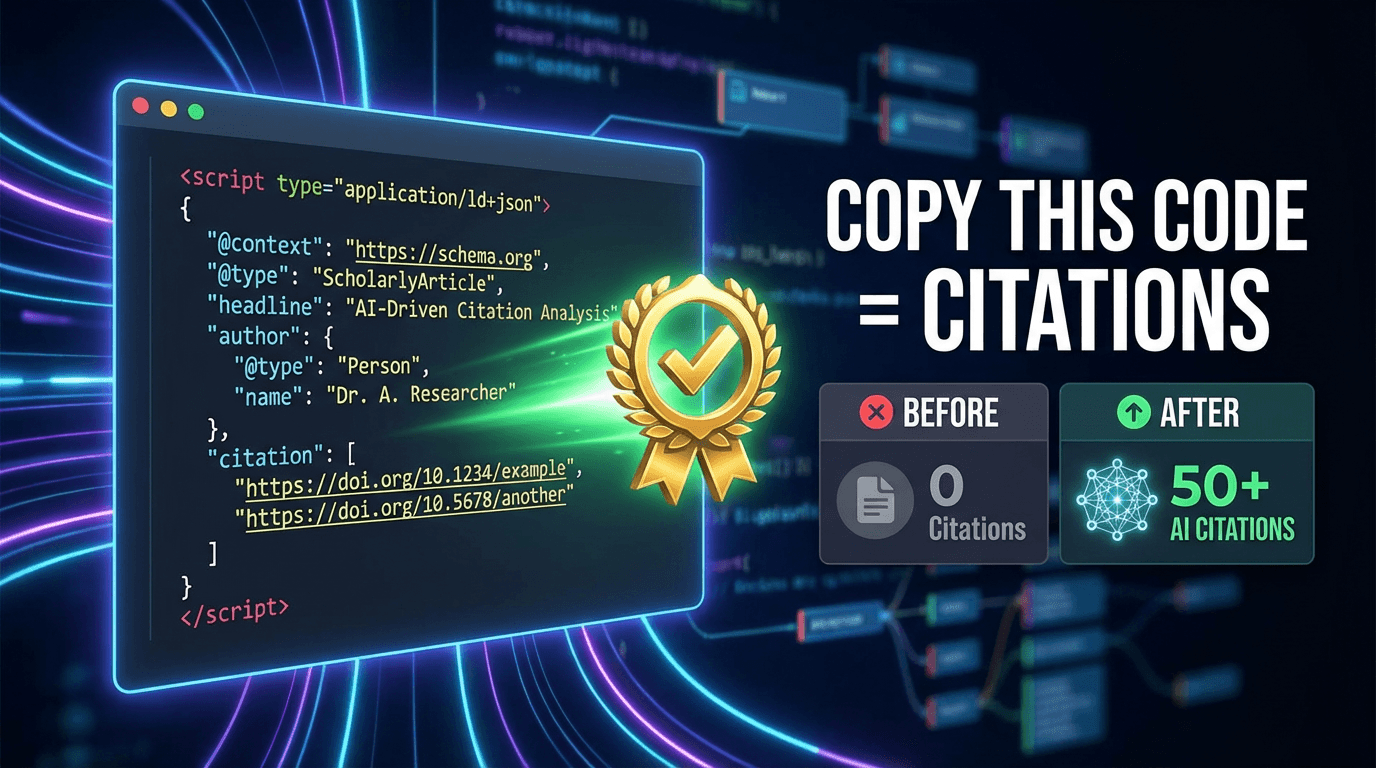
- JSON-LD is the preferred structured data format for AI systems
- Every page needs appropriate schema: Organization, Service/Product, Article, FAQ
- Use @id to create referenceable entities that link your schema together
- FAQ schema is particularly valuable for AI citations
- Validate and regularly update your schema implementation
Why JSON-LD Schema Matters for AI
AI systems like ChatGPT, Claude, and Perplexity don't just read your content, they try to understand it. JSON-LD schema markup provides explicit, machine-readable signals about what your content means.
The impact:- Websites with comprehensive schema are 3x more likely to be cited by AI
- Schema helps AI understand entity relationships
- Structured data provides "cite-ready" information
Essential Schema Types for AI Visibility
Organization Schema
Every business website needs this foundation. Your Organization schema should include @type Organization, a unique @id, your company name and description, URL, logo as an ImageObject, contact information, social profile links via sameAs, founding date, and number of employees.
Key fields for AI:- description: Make this cite-worthy (40-60 words)
- sameAs: Links to social profiles help AI verify identity
- foundingDate and numberOfEmployees: Credibility signals
Service/Product Schema
For each service or product you offer, include @type Service, a unique @id, service name and description (with outcomes like "increase traffic by 200%"), provider reference to your Organization, service type, area served, and pricing information through hasOfferCatalog.
Key fields for AI:- description: Include outcomes ("increase traffic by 200%")
- provider: Link to your Organization schema
- Pricing information helps AI answer cost questions
FAQ Schema
FAQ schema is particularly powerful for AI citations. Use @type FAQPage with mainEntity containing an array of Question objects, each with a name (the question) and acceptedAnswer containing the Answer text.
Best practices:- Use natural question phrasing
- Provide specific, numerical answers when possible
- Include 3-5 FAQs per page
- Answers should be 40-60 words
Article Schema
For blog posts and articles, include @type Article, headline (under 110 characters), description, image URL, datePublished, dateModified, author as a Person with jobTitle and knowsAbout fields, publisher referencing your Organization, and mainEntityOfPage.
Key fields for AI:- author with expertise signals (jobTitle, knowsAbout)
- datePublished and dateModified: Freshness matters
- Link to your Organization as publisher
Professional/Person Schema
For consultants, coaches, and professional services, use @type Person with name, jobTitle, description (including outcomes and experience), URL, image, sameAs social links, hasCredential for certifications, knowsAbout for expertise areas, and alumniOf for education.
Key fields for AI:- hasCredential: Professional certifications
- knowsAbout: Expertise areas (helps AI match you to queries)
- description: Include outcomes and experience
LocalBusiness Schema
For location-based businesses, include @type LocalBusiness, name, description, URL, telephone, priceRange, full address as PostalAddress, geo coordinates, openingHoursSpecification with days and times, and aggregateRating.
Implementation Best Practices
1. Use @id for Entity Linking
Create referenceable entities that connect your schema. Reference other entities using their @id value, like: "provider": { "@id": "https://yoursite.com/#organization" }
This tells AI that entities on different pages are the same thing.
2. Include Multiple Schema Types
Combine relevant schemas on each page:
- Homepage: Organization + WebSite + LocalBusiness (if applicable)
- Service Page: Service + FAQ + BreadcrumbList
- Blog Post: Article + FAQ + BreadcrumbList
3. Validate Your Implementation
Test with:
- Google Rich Results Test
- Schema.org Validator
- Check actual page source
4. Keep Schema Current
Update when:
- Prices change
- Services update
- Team changes
- Reviews accumulate
Want to see your AI visibility score?
Get a free GEO audit and discover exactly what's holding your site back in AI search, in 90 seconds.
Start Free AuditFrequently Asked Questions
Where should I place JSON-LD on my pages?
Place JSON-LD in a script tag with type application/ld+json, typically in the head section or at the end of the body. You can have multiple JSON-LD blocks on a single page for different schema types.
How many schema types should I use on one page?
Use as many as are relevant and accurate. A typical service page might include Organization, Service, FAQ, and BreadcrumbList schemas. More comprehensive schema increases AI understanding, but all data must be accurate and relevant to the page.
Does schema markup directly improve AI citations?
Yes. AI systems specifically look for structured data to understand and cite your content. Schema markup makes your information machine-readable and cite-worthy. Websites with comprehensive schema are cited more often and more accurately.
What is the @id property in schema?
The @id creates a unique identifier for your entity that can be referenced elsewhere. This is crucial for linking related schemas, your Person schema can reference your Organization using its @id, creating clear entity relationships AI can understand.
Should I use JSON-LD, Microdata, or RDFa?
JSON-LD is strongly recommended. Google and most AI systems prefer JSON-LD because it is separate from your HTML, easier to maintain, and can include complex nested relationships. Microdata and RDFa work but are more difficult to implement correctly.
Cited Team
AI Search Optimization Experts
The Cited team builds and runs a 120+ factor audit engine for AI search visibility. Our experts combine deep technical knowledge with practical experience helping businesses get found by ChatGPT, Claude, Perplexity, and other AI assistants.
Topics
Ready to Optimize Your Site for AI Search?
Get a free GEO audit and see your optimization score in 90 seconds.
Start Free Audit