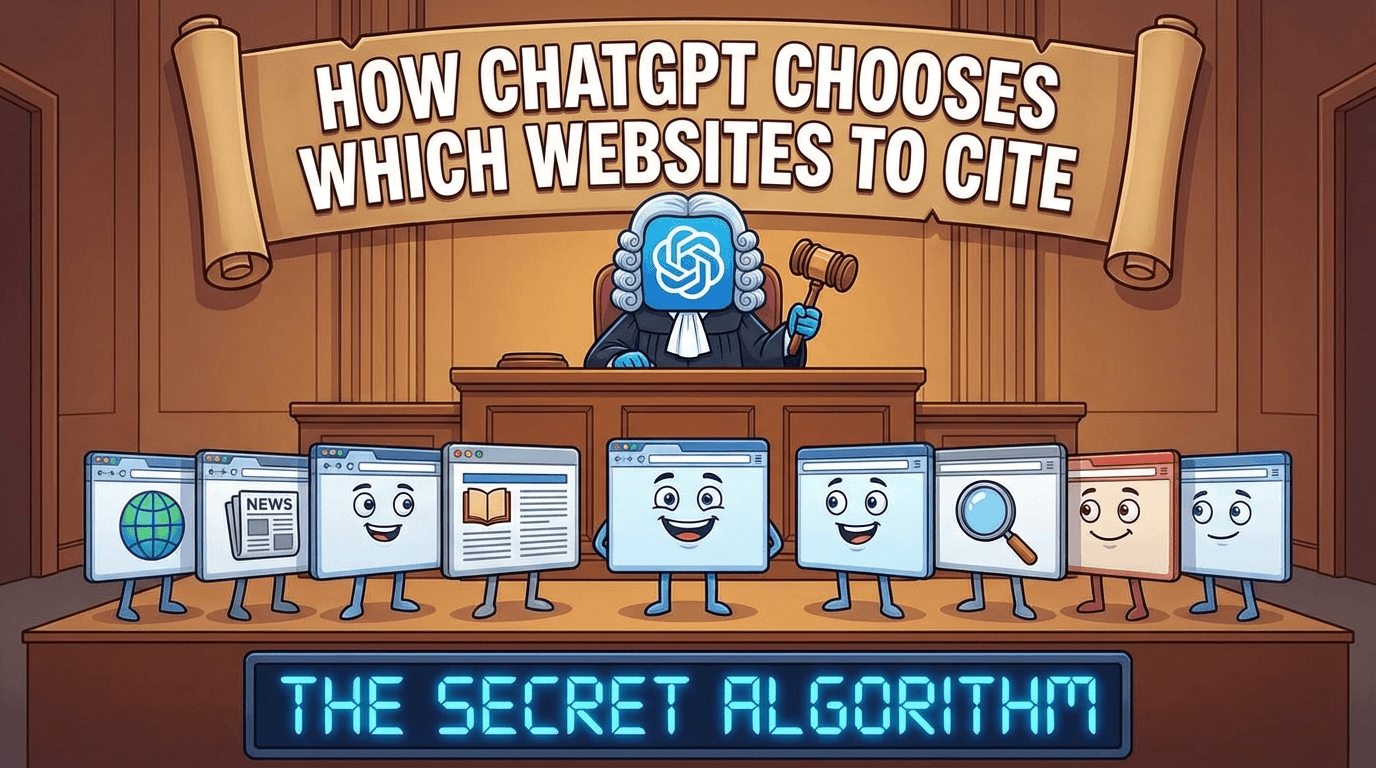
How ChatGPT Chooses Which Websites to Cite
Discover the factors that influence which websites ChatGPT and other AI systems cite in their responses, and learn how to increase your chances of being referenced.
This article is part of our The Complete Guide to GEO Optimization in 2026 series.
Articles in this series (6 of 7):
Key Takeaways
- AI systems prefer authoritative, well-structured content with clear answers
- Content must be technically accessible to AI crawlers (check robots.txt)
- Original data, research, and specific statistics increase citation likelihood
- Cite-worthy content has clear, quotable statements that stand alone
- Schema markup helps AI understand and trust your content
How AI Systems Select Sources
Understanding how ChatGPT and other AI language models choose which websites to cite is crucial for optimizing your content for AI search visibility. While the exact algorithms are proprietary, research and testing have revealed key factors that influence AI citation decisions.
The Citation Decision Process
When ChatGPT (and similar AI systems) generates responses, it draws from:
- Training Data: Information learned during model training
- Web Browsing (when enabled): Real-time web searches for current information
- Retrieval Systems: Connected knowledge bases and search indexes
For web-browsing enabled responses, the AI essentially performs searches and synthesizes information from multiple sources, deciding which to cite based on several factors.
Key Factors That Influence AI Citations
1. Content Authority and Trustworthiness
AI systems have learned to recognize authoritative sources. Signals include:
- Domain reputation: Established, well-known websites are preferred
- Author expertise: Clear author credentials and expertise indicators
- Citation by others: Content frequently referenced by other authoritative sources
- Accuracy history: Sites known for factual, accurate information
2. Content Structure and Extractability
AI systems prefer content that's easy to extract and understand:
- Clear definitions: Opening sentences that directly answer questions
- Structured format: Headers, lists, and organized information
- Standalone statements: Sentences that make sense out of context
- Schema markup: Structured data that clarifies content meaning
3. Topical Relevance and Depth
Content must closely match the user's query:
- Direct answers: Content that explicitly addresses the question
- Comprehensive coverage: Thorough treatment of the topic
- Specific examples: Concrete information, not just generalities
- Updated information: Current, recently-updated content
4. Content Uniqueness
AI avoids citing:
- Duplicate content appearing on multiple sites
- Thin content that doesn't add value
- Content that merely summarizes other sources
Original research, unique insights, and proprietary data are more likely to be cited.
What Makes Content "Cite-Worthy"
Based on analysis of AI citations, cite-worthy content typically:
Has Clear, Quotable Statements
Not cite-worthy: "There are many factors to consider when thinking about this topic." Cite-worthy: "The average GEO score for websites is 38/100, indicating significant optimization opportunities for most businesses."Provides Specific Data and Statistics
AI systems love concrete data they can reference:
- Original research findings
- Industry statistics
- Survey results
- Case study metrics
Answers Questions Directly
Structure content to directly answer common questions:
- Start paragraphs with the answer
- Use question-based headers
- Include FAQ sections with clear answers
Demonstrates Expertise
Show your expertise through:
- Detailed explanations
- Technical depth when appropriate
- Author credentials and experience
- Case studies and real examples
Technical Requirements for AI Visibility
Schema Markup Implementation
Essential schema types for AI citation:
{
  "@type": "Article",
  "headline": "Your Article Title",
  "author": {
    "@type": "Person",
    "name": "Author Name"
  },
  "datePublished": "2026-01-01"
}
robots.txt Configuration
Ensure AI crawlers can access your content:
User-agent: GPTBot
Allow: /

User-agent: Claude-Web
Allow: /

User-agent: PerplexityBot
Allow: /
Content Freshness Signals
Indicate when content was last updated:
- Include publish and update dates
- Use dateModified schema
- Regularly review and update content
Common Mistakes That Prevent Citations
1. Blocking AI Crawlers
Many sites unknowingly block AI bots in robots.txt, making their content invisible to AI systems.
2. Content Behind Paywalls
Content that requires login or payment cannot be accessed or cited by AI systems.
3. Heavy JavaScript Rendering
Content rendered entirely by JavaScript may not be accessible to AI crawlers.
4. Vague, Non-Specific Content
Generic content without specific data or insights rarely gets cited.
How to Increase Your AI Citations
Immediate Actions
- Check your robots.txt allows AI crawlers
- Implement FAQ schema on relevant pages
- Add clear author information
- Include specific data and statistics
Content Strategy
- Create original research and data
- Structure content with extractable answers
- Update content regularly
- Build topical authority through depth
Technical Optimization
- Implement comprehensive schema markup
- Ensure fast loading and accessibility
- Use clear, semantic HTML structure
- Maintain a logical site architecture
Measuring AI Citation Success
While there's no direct analytics for AI citations, you can:
- Manually test by querying AI tools about your topics
- Monitor brand mention trends
- Track referral traffic from AI-powered search tools
- Use GEO audit tools to assess your optimization status
Want to see your AI visibility score?
Get a free GEO audit and discover exactly what's holding your site back in AI search, in 90 seconds.
Start Free AuditFrequently Asked Questions
Does ChatGPT always cite its sources?
ChatGPT does not always cite sources, especially for general knowledge from its training data. It's more likely to provide citations when web browsing is enabled and for specific, factual claims that come from particular sources.
Can I pay to get cited by ChatGPT?
No, there is currently no paid placement option for AI citations. Citations are earned through content quality, authority, and optimization. Focus on creating valuable, well-structured content that AI systems want to reference.
How do I know if ChatGPT is citing my website?
You can test by asking ChatGPT questions relevant to your content with web browsing enabled. Ask specific questions that your content answers uniquely. You can also monitor for increased traffic from AI-powered search tools in your analytics.
Why does ChatGPT cite competitors but not my site?
Common reasons include: blocked AI crawlers in robots.txt, content not structured for extraction, lack of clear authority signals, content behind paywalls, or competitors having more specific/unique information on the topic.
Cited Team
AI Search Optimization Experts
The Cited team builds and runs a 120+ factor audit engine for AI search visibility. Our experts combine deep technical knowledge with practical experience helping businesses get found by ChatGPT, Claude, Perplexity, and other AI assistants.
Topics
Ready to Optimize Your Site for AI Search?
Get a free GEO audit and see your optimization score in 90 seconds.
Start Free Audit