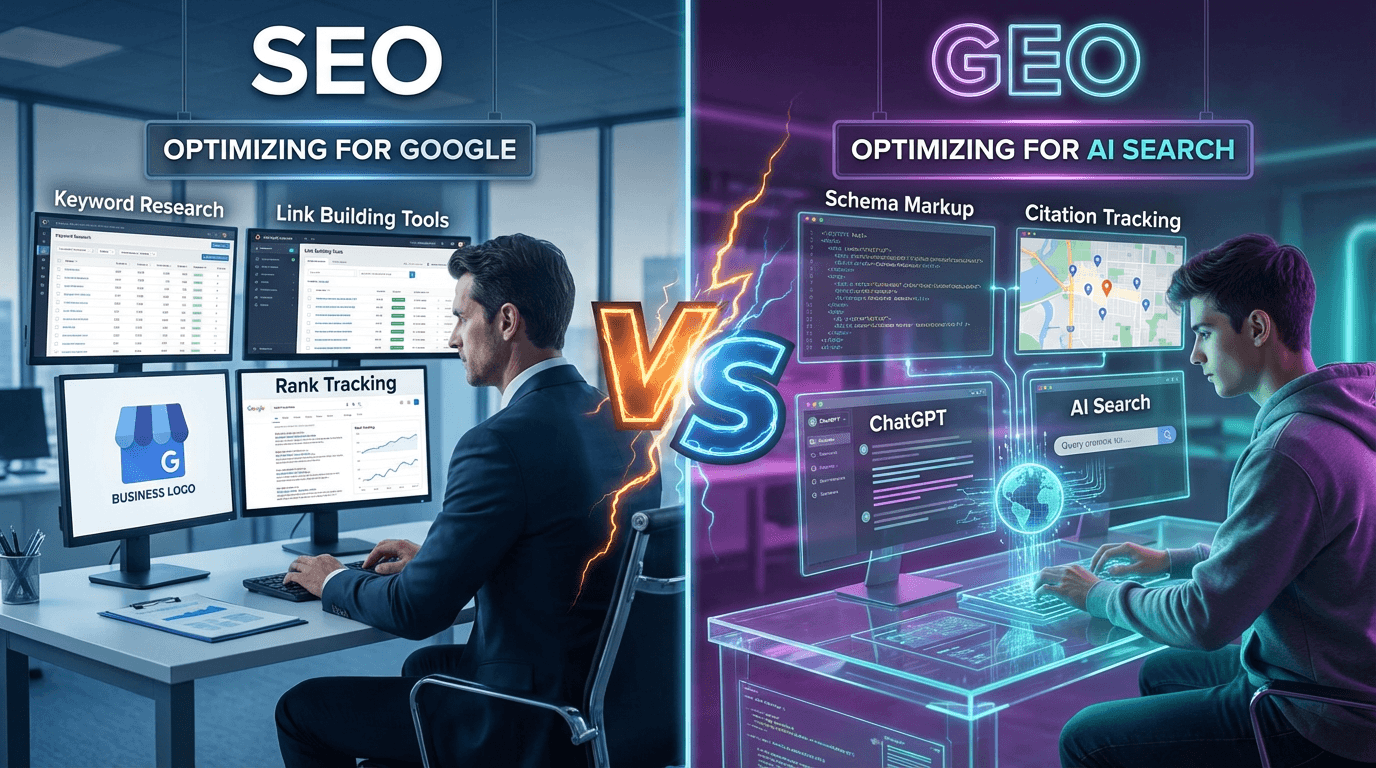
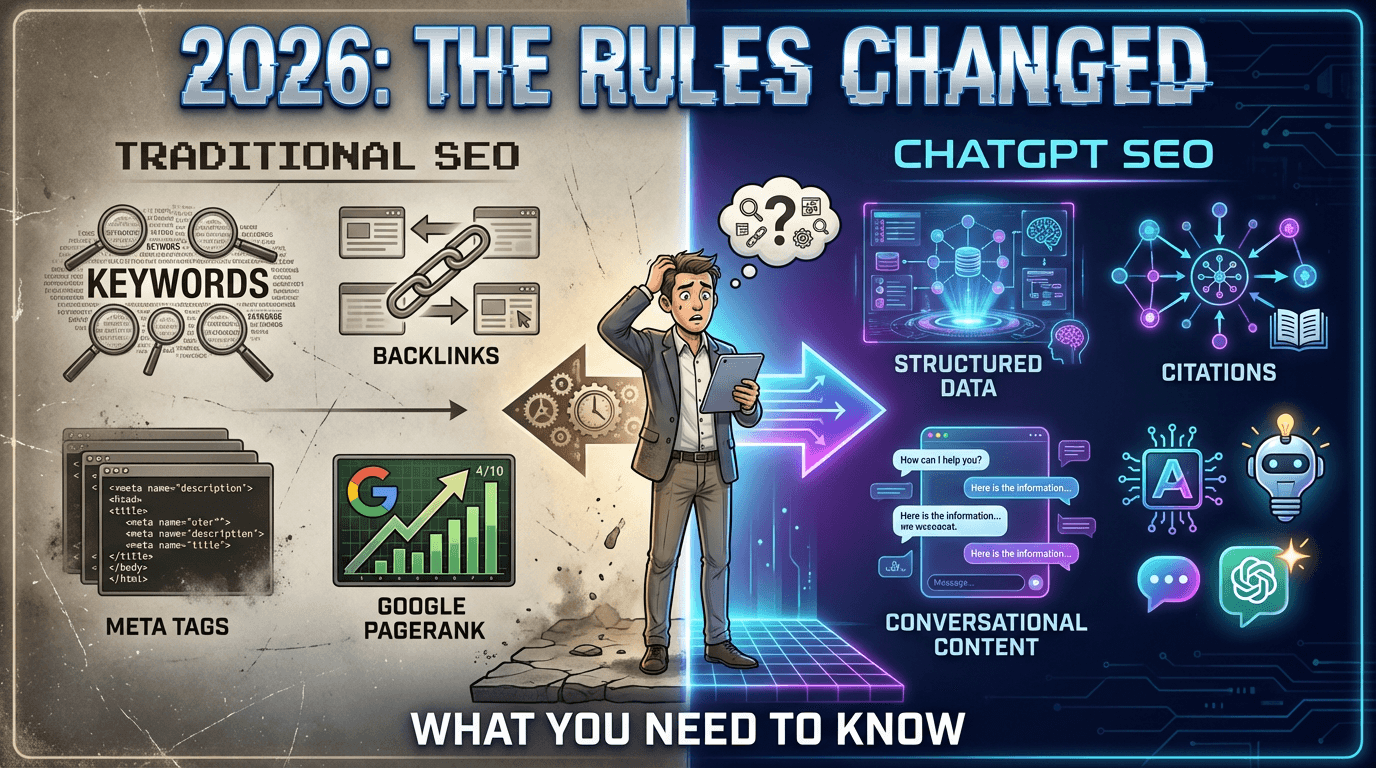
Perplexity vs Google: How AI is Changing Search in 2026
Compare Perplexity and Google search: features, accuracy, user experience, and what it means for businesses optimizing for both platforms.
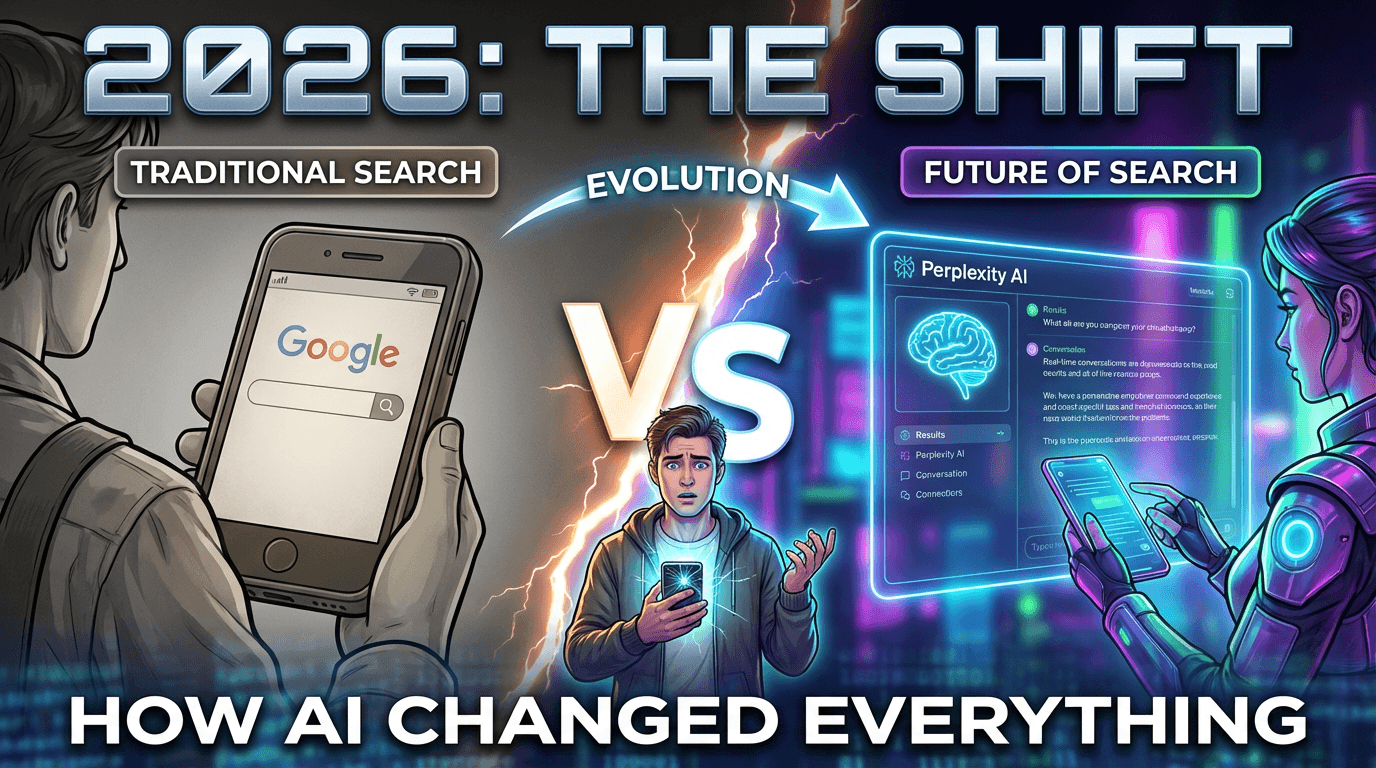
Key Takeaways
- Perplexity provides direct answers while Google provides links
- Both platforms use different methods to evaluate content
- Perplexity is gaining users rapidly, especially for research tasks
- Businesses need to optimize for both platforms differently
- The future likely involves hybrid search experiences
Perplexity vs Google: Understanding the New Search Landscape
Last updated: January 2026Perplexity has emerged as a serious contender in the search market, reaching over 100 million monthly users. But how does it actually compare to Google, and what does this mean for your business?
How Each Platform Works
Google Search
Google's approach:
- Crawls and indexes billions of web pages
- Matches queries to relevant pages
- Ranks pages by ~200+ factors
- Presents a list of links (and AI Overviews)
- Users click to find answers
Perplexity Search
Perplexity's approach:
- Receives a natural language question
- Searches the web in real-time
- Synthesizes information from sources
- Presents a direct answer with citations
- Users get immediate answers
Feature Comparison
| Feature | Perplexity | |
|---|---|---|
| Result Format | Links list + AI Overview | Direct answer + sources |
| Information Currency | Indexed (hours/days old) | Real-time web access |
| Advertising | Ad-supported | Freemium model |
| Query Types | All (navigational, informational, transactional) | Best for informational |
| Follow-up Questions | New search required | Conversational threading |
| Source Transparency | Link destination visible | Sources clearly cited |
User Experience Differences
When Google is Better
- Navigational searches: Finding a specific website
- Shopping searches: Comparing products with ads
- Local searches: Finding nearby businesses
- Image/Video searches: Visual content discovery
- Diverse perspectives: Seeing multiple viewpoints
When Perplexity is Better
- Research questions: Complex topics needing synthesis
- Quick answers: Direct facts without clicking
- Current events: Real-time information
- Follow-up questions: Conversational exploration
- Citation needs: Seeing sources immediately
What This Means for Businesses
The Opportunity
Perplexity is growing rapidly but has fewer businesses optimizing for it. This creates opportunity:
- Less competition for AI citations
- Early mover advantage
- Access to research-focused users
- Higher-intent audience
The Challenge
Optimizing for Perplexity requires different strategies:
- Content must be answer-ready
- Authority signals matter differently
- No traditional ranking to target
- Success is harder to measure
How to Optimize for Both Platforms
Content Strategy
For Both:- Create comprehensive, authoritative content
- Ensure factual accuracy with sources
- Keep information current
- Keyword optimization
- Meta descriptions for CTR
- Featured snippet targeting
- Q&A format content
- Clear, extractable answers
- Strong citation worthiness
Technical Optimization
For Both:- Fast loading, mobile-friendly
- Crawlable content
- Clean site architecture
- Core Web Vitals optimization
- Internal linking structure
- XML sitemap optimization
- Enhanced schema markup
- Entity clarity
- FAQ structured data
Authority Building
For Both:- Earn mentions from authoritative sources
- Build consistent brand presence
- Demonstrate expertise
- Backlink acquisition
- Domain authority building
- Local citations
- Citation from trusted sources
- Expertise signals in content
- Clear author attribution
The Future of Search
The search landscape is fragmenting. Consider:
- Google remains dominant but AI Overviews reduce clicks
- Perplexity captures research and informational queries
- ChatGPT handles conversational searches
- Claude serves power users and professionals
Measuring Success Across Platforms
Google Metrics
- Organic traffic (Google Analytics)
- Keyword rankings (SEO tools)
- Click-through rates (Search Console)
- Conversion rates
Perplexity Metrics
- Citation frequency (manual testing)
- Brand mentions (brand monitoring)
- Query coverage (systematic testing)
- Source positioning
Getting Started with Multi-Platform SEO
- Audit Current State
- Optimize Foundation
- Platform-Specific Optimization
- Monitor and Adjust
Conclusion
The Google vs Perplexity debate misses the point. Both platforms serve different user needs, and both are part of the future search ecosystem. Successful businesses will optimize for both, capturing users wherever they search.
---
Ready to optimize for AI search? Get a free audit covering Google, Perplexity, ChatGPT, and Claude visibility.Want to see your AI visibility score?
Get a free GEO audit and discover exactly what's holding your site back in AI search, in 90 seconds.
Start Free AuditFrequently Asked Questions
Is Perplexity better than Google?
Neither is universally better, they serve different purposes. Google excels at finding specific websites and providing diverse results. Perplexity excels at synthesizing information and providing direct answers. Many users now use both depending on their search intent.
How does Perplexity rank search results?
Perplexity doesn't rank results like Google. Instead, it synthesizes information from multiple sources to provide a direct answer, citing the sources it used. It prioritizes authoritative, accurate, and relevant content.
Should I optimize for Perplexity or Google?
Both. Google still handles the majority of searches, but Perplexity is growing rapidly, especially for research and informational queries. A comprehensive SEO strategy should address both platforms.
Will Perplexity replace Google?
Unlikely in the near term. Google has massive infrastructure, brand recognition, and handles diverse search types. However, Perplexity and similar AI search engines will capture an increasing share of research and informational queries.
How do I get my website to appear in Perplexity?
Perplexity cites sources that provide clear, authoritative answers to questions. Optimize by creating comprehensive, accurate content with strong authority signals. Schema markup, FAQ content, and entity clarity all help.
Cited Team
AI Search Optimization Experts
The Cited team builds and runs a 120+ factor audit engine for AI search visibility. Our experts combine deep technical knowledge with practical experience helping businesses get found by ChatGPT, Claude, Perplexity, and other AI assistants.
Topics
Ready to Optimize Your Site for AI Search?
Get a free GEO audit and see your optimization score in 90 seconds.
Start Free Audit