ChatGPT vs Google: How Search Is Changing (And What to Do About It)
The search landscape is splitting in two. Learn how ChatGPT and Google serve different needs, why this matters for your business, and how to optimize for both.
Key Takeaways
- Search is splitting between traditional Google and AI assistants like ChatGPT
- 40% of Gen Z prefers AI over Google, optimize now before competitors do
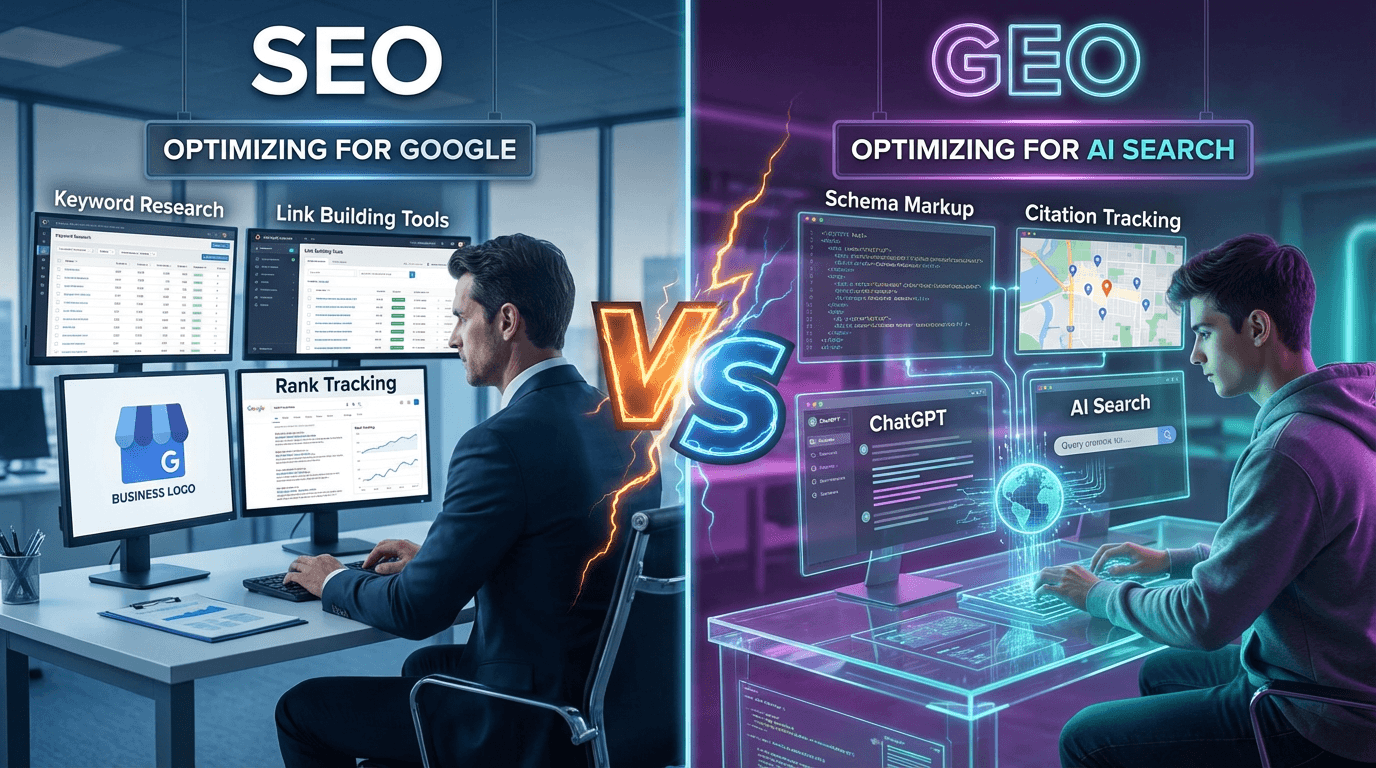
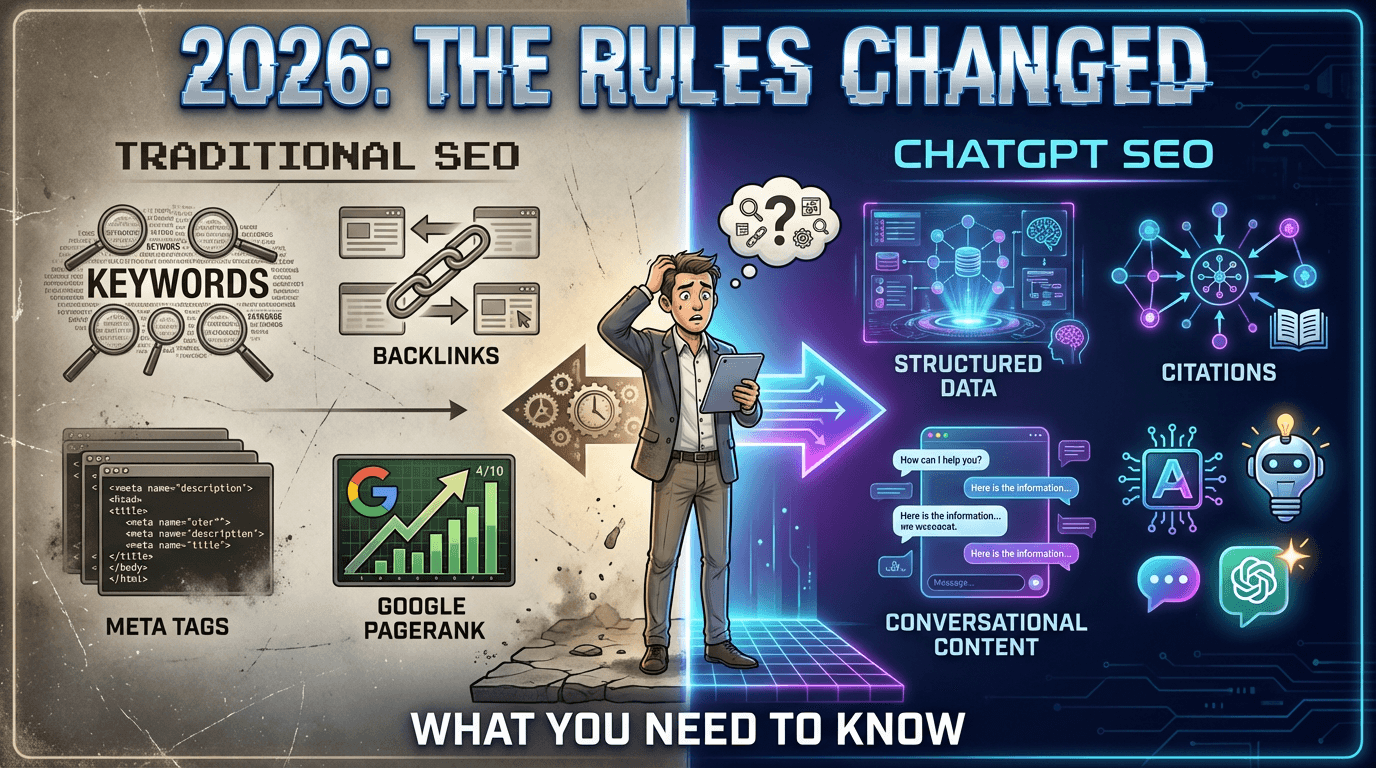
- Google and AI require different optimization: backlinks vs. structured content
- The winning strategy is dual optimization, not choosing one over the other
- AI optimization techniques also benefit traditional Google rankings
The Great Search Divide
For 25 years, Google dominated how people find information online. That era is ending.
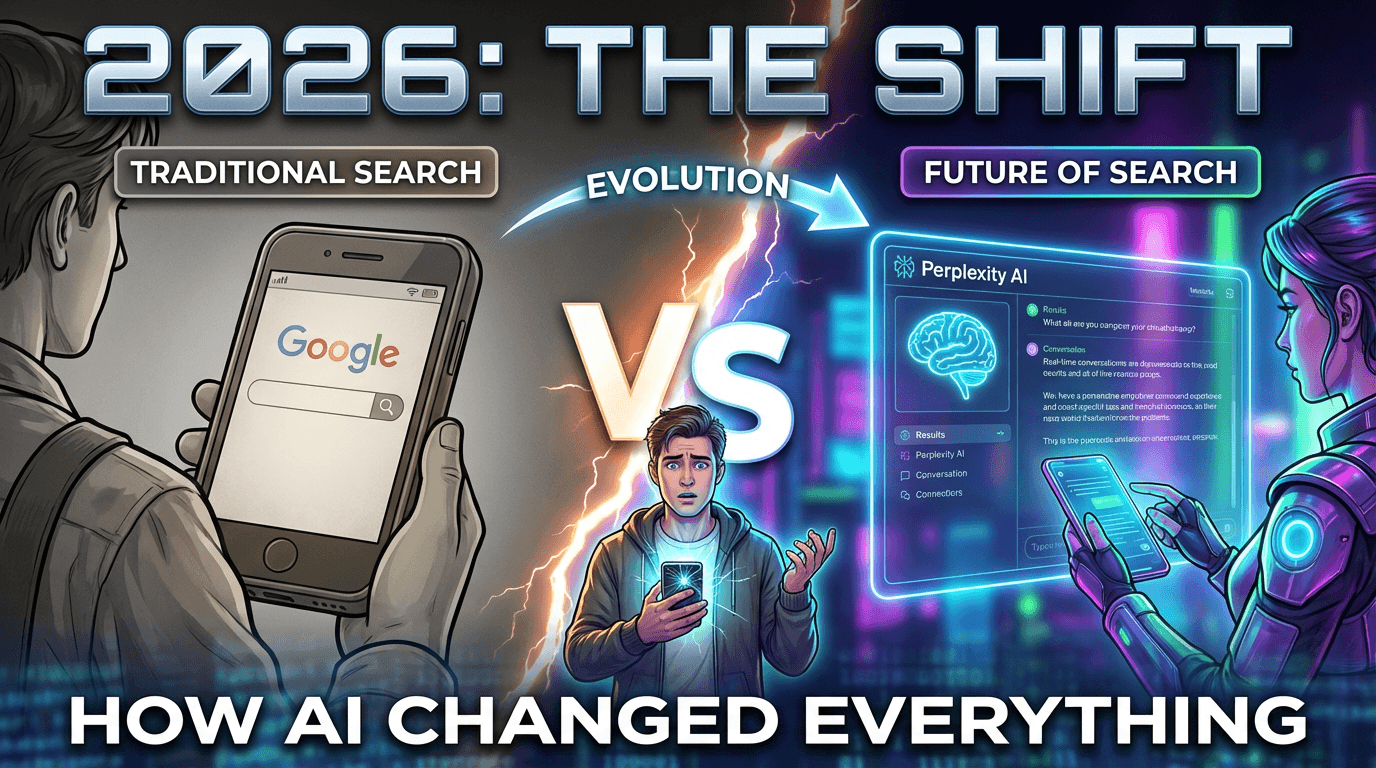
Today, users increasingly split their searches between traditional search engines and AI assistants. Understanding this shift, and optimizing for both, is now essential for business visibility.
How Search Behavior Is Changing
The Numbers
- Younger consumers increasingly prefer AI chatbots over traditional search
- AI search queries are growing rapidly year over year
- A growing share of Google searches now show AI Overviews
- Traditional search traffic is widely expected to decline as AI assistants take over more queries
Who Uses What
Google is still preferred for:- Shopping and product research
- Local business discovery
- Image and video searches
- Complex research with multiple sources
- Navigational queries (finding specific websites)
- Quick factual questions
- How-to and instructional queries
- Recommendations and comparisons
- Research summaries
- Conversational exploration
Google vs AI: Key Differences
| Aspect | Google Search | AI Search (ChatGPT, etc.) |
|---|---|---|
| Output | List of links | Direct answers |
| User Action | Click and browse | Read and follow up |
| Ranking Factors | Backlinks, keywords | Content structure, clarity |
| Visibility | Position 1-10 | Cited or not cited |
| Traffic Model | Clicks to your site | May get citation, may not |
| Update Speed | Real-time | Varies by AI system |
What This Means for Your Business
The Visibility Split
You now need two types of visibility:
- Google visibility: Ranking in traditional search results
- AI visibility: Being cited by AI systems
A site can be #1 on Google and invisible to ChatGPT, or cited by every AI system while buried on Google page 3.
Different Optimization Requirements
For Google, you need:- Backlinks from authoritative sites
- Keyword optimization
- Technical SEO (speed, mobile, Core Web Vitals)
- Domain authority
- Schema markup for content understanding
- Structured, extractable content
- Direct answers to questions
- Clear authority signals
The Good News
Many fundamentals help both:
- High-quality, comprehensive content
- Clear site structure
- Fast, mobile-friendly pages
- Accurate, trustworthy information
How to Optimize for Both
Strategy 1: Build on SEO Foundations
If your SEO is strong:
- Keep doing what works for Google
- Layer AI optimizations on top
- Add schema markup to existing content
- Restructure key pages for AI extraction
Strategy 2: Prioritize by Audience
Consider your audience's search behavior:
- B2B / Professional services: Prioritize AI (research-heavy users)
- E-commerce / Local: Prioritize Google (transaction-focused)
- Content / Media: Optimize both equally
Strategy 3: Content Format Optimization
Create content that serves both:
Traditional SEO format: > "The Ultimate Guide to GEO Optimization: Everything You Need to Know About Improving Your AI Search Visibility in 2026" AI-optimized format: > "## What is GEO optimization? > GEO optimization is the practice of improving your website's visibility in AI search results. It involves schema markup, content restructuring, and technical accessibility..." Best approach: Use the second format. It works for both AI extraction AND traditional SEO (Google also favors clear, direct answers).The Future of Search
Short-Term (2025-2026)
- AI search continues rapid growth
- Google integrates more AI features
- Dual optimization becomes standard
Medium-Term (2026-2028)
- AI search may capture 30-40% of queries
- Traditional SEO remains important
- Winners optimize for both
Long-Term (2028+)
- Search becomes primarily conversational
- Direct answers replace link lists
- AI visibility becomes primary metric
Action Plan: Preparing for Both Worlds
This Week
- Run a GEO audit to assess AI visibility
- Check Google Search Console for SEO status
- Identify gaps in both
This Month
- Fix critical AI visibility issues (robots.txt, schema)
- Maintain SEO fundamentals
- Restructure 3-5 key pages for both
This Quarter
- Comprehensive schema implementation
- Content optimization for AI extraction
- Monitor both Google and AI visibility
Don't Choose, Optimize for Both
The businesses that thrive will be those that maintain Google visibility while building AI visibility. It's not either/or, it's both.
→ Check Your AI Visibility ScoreStart with a free GEO audit to see where you stand on AI visibility. Combined with your Google Search Console data, you'll have a complete picture of your search presence.
Want to see your AI visibility score?
Get a free GEO audit and discover exactly what's holding your site back in AI search, in 90 seconds.
Start Free AuditFrequently Asked Questions
Should I prioritize Google or AI optimization?
Don't choose, optimize for both. However, if resources are limited, consider your audience. B2B and professional services should lean toward AI optimization (research-heavy users). E-commerce and local businesses should maintain Google priority while adding AI basics.
Will Google become irrelevant?
No, Google will remain important for years. Even with AI growth, Google handles billions of searches daily and dominates shopping, local, and visual search. The smart strategy is dual optimization, not abandoning Google for AI.
How do I track AI search traffic separately?
Check referral traffic from ai.com (ChatGPT), perplexity.ai, and similar domains in your analytics. For Google AI Overviews, traffic still shows as Google organic. Some tools now offer AI citation monitoring, though it's an evolving space.
Does optimizing for AI hurt Google rankings?
No, AI optimization techniques actually help Google too. Schema markup, clear content structure, and direct answers improve both AI visibility and traditional SEO. Google's own AI Overviews use similar signals to ChatGPT and others.
Cited Team
AI Search Optimization Experts
The Cited team builds and runs a 120+ factor audit engine for AI search visibility. Our experts combine deep technical knowledge with practical experience helping businesses get found by ChatGPT, Claude, Perplexity, and other AI assistants.
Topics
Ready to Optimize Your Site for AI Search?
Get a free GEO audit and see your optimization score in 90 seconds.
Start Free Audit