SEO and GEO Together: How to Combine Both Strategies in 2026
You don't have to choose between GEO and SEO. Learn how the two strategies reinforce each other and how to run one combined program for search visibility in 2026.
Key Takeaways
- GEO and SEO serve different search behaviors and user needs
- The best strategy combines both approaches rather than choosing one
- SEO focuses on rankings and clicks; GEO focuses on citations and mentions
- Strong SEO foundations support better GEO performance
- Track metrics for both traditional search and AI search to measure success
Understanding GEO and SEO
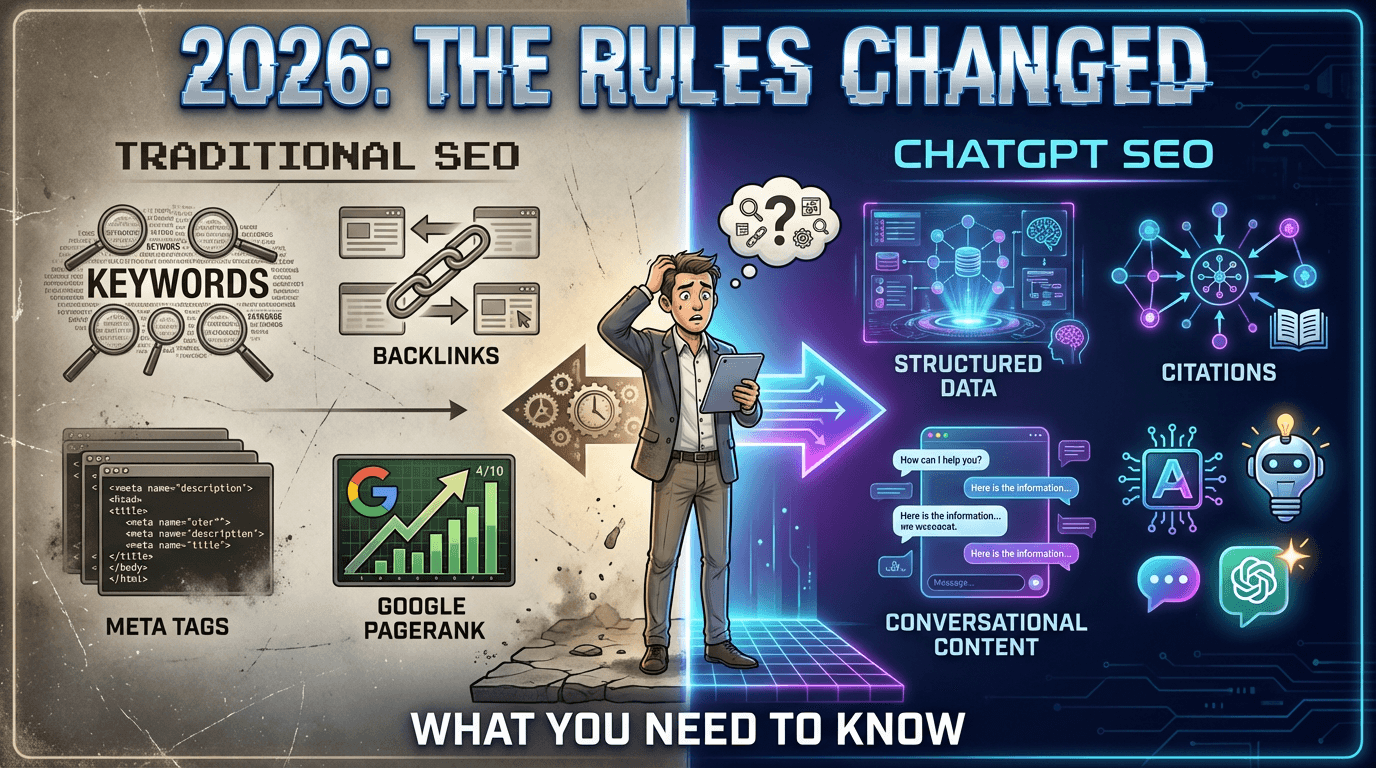
The search landscape is undergoing its most significant transformation since Google's introduction of PageRank. Traditional SEO (Search Engine Optimization) now coexists with GEO (Generative Engine Optimization), and understanding both is crucial for digital success.
This guide focuses on how to run SEO and GEO as one combined program. If you want a term-by-term, side-by-side breakdown first, start with our complete GEO vs SEO comparison.
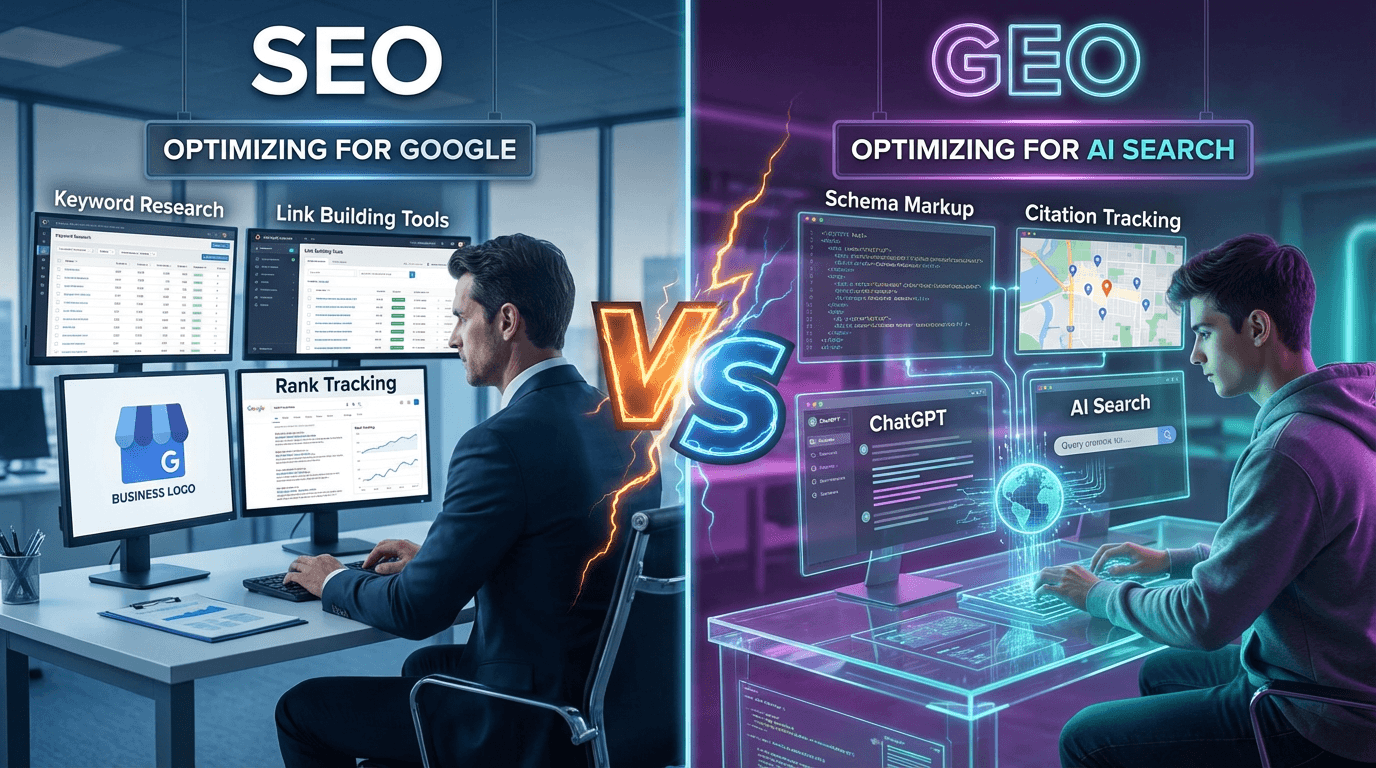
SEO focuses on optimizing websites to rank higher in traditional search engine results pages (SERPs), primarily Google's blue links. GEO focuses on optimizing content to be discovered, understood, and cited by AI-powered search systems like ChatGPT, Claude, Perplexity, and Google's AI Overviews.The Key Differences Explained
How Users Interact
Traditional Search (SEO):- Users type keywords into a search box
- Browse through a list of 10 blue links
- Click on results and navigate to websites
- May visit multiple sites to find answers
- Users ask natural language questions
- Receive synthesized, direct answers
- May never visit the original source
- Expect conversational follow-up capabilities
What Gets Rewarded
SEO Ranking Factors:- Backlink quantity and quality
- Keyword optimization
- Page speed and Core Web Vitals
- Domain authority and age
- User engagement metrics
- Content clarity and structure
- Schema markup implementation
- Direct answer availability
- Entity recognition
- Cite-worthy content snippets
Content Format Requirements
SEO-Optimized Content:- Keyword-rich titles and headers
- Long-form comprehensive content
- Internal and external linking
- Optimized images with alt text
- Strategic keyword placement
- Question-based headers
- Direct answers in opening sentences
- FAQ sections with schema markup
- Clear entity definitions
- Conversational, extractable content
Why You Need Both Strategies
1. Different Audiences, Different Behaviors
Not all users have shifted to AI search. Many still rely on traditional Google searches, especially for:
- Product research and comparisons
- Local business discovery
- Image and video searches
- Complex research projects
Meanwhile, AI search is dominant for:
- Quick factual questions
- How-to queries
- Recommendations
- Conversational exploration
2. They Reinforce Each Other
Strong SEO foundations often support better GEO performance:
- Quality content ranks well AND gets cited by AI
- Technical SEO (site speed, mobile-friendliness) helps both
- Authority signals benefit traditional and AI search
- Good user experience matters for all visitors
3. Hedge Against Uncertainty
The search landscape is evolving rapidly. By investing in both:
- You're protected regardless of how user behavior shifts
- You maximize visibility across all search interfaces
- You future-proof your digital marketing strategy
How to Balance GEO and SEO
Start With SEO Fundamentals
Before optimizing for AI, ensure your SEO basics are solid:
- Technical SEO is clean (no crawl errors, fast loading)
- Content is high-quality and comprehensive
- Site architecture is logical
- Core Web Vitals pass
Layer On GEO Optimizations
Add GEO-specific elements:
- Implement comprehensive schema markup
- Add FAQ sections to key pages
- Restructure content for extractability
- Ensure direct answers are present
Measure Both Metrics
Track success across both dimensions:
- Traditional: Rankings, organic traffic, conversions
- GEO: AI tool citations, brand mentions, answer engine appearances
The Integrated Approach
The most successful websites in 2026 don't choose between GEO and SEO, they optimize for both simultaneously. This means:
- Writing content that answers questions directly (GEO) while remaining comprehensive (SEO)
- Using schema markup that helps AI understand context while providing rich results in Google
- Building authority through backlinks that signal trustworthiness to both traditional and AI search
- Creating user experiences that serve visitors whether they click through from Google or arrive via AI-provided links
Conclusion
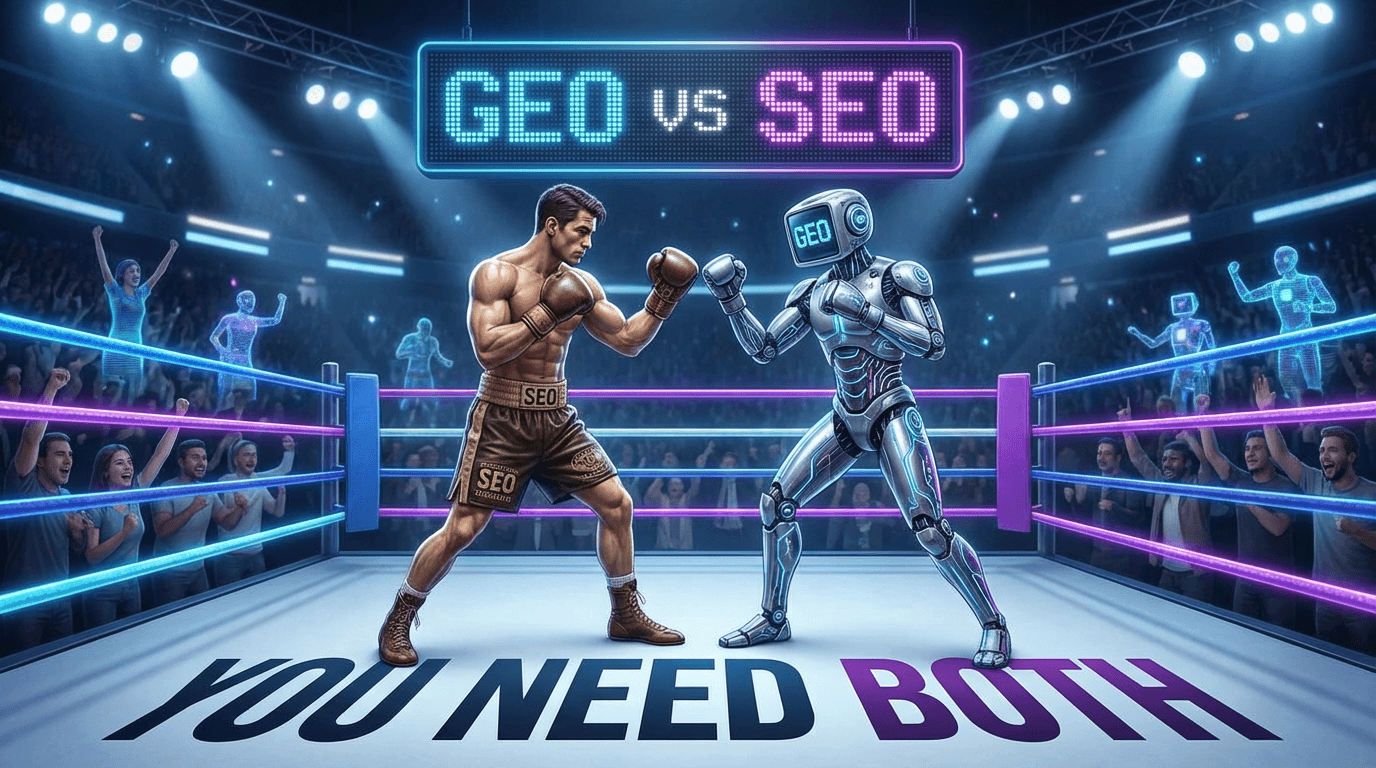
GEO and SEO are not competitors, they're complementary strategies for a fragmented search landscape. The businesses that will thrive are those that master both, creating content that ranks in traditional search AND gets cited by AI systems.
Start by auditing your current optimization status across both dimensions, then build a strategy that addresses gaps in each area.
Want to see your AI visibility score?
Get a free GEO audit and discover exactly what's holding your site back in AI search, in 90 seconds.
Start Free AuditFrequently Asked Questions
Should I prioritize GEO or SEO?
Neither should be prioritized exclusively. The best approach is to build strong SEO fundamentals first, then layer GEO optimizations on top. If your SEO is already solid, focus more attention on GEO to capture the growing AI search audience.
Can the same content work for both GEO and SEO?
Yes, well-structured content can serve both purposes. Write comprehensive content (good for SEO) that includes direct answers and FAQ sections (good for GEO). The key is ensuring content is both thorough and easily extractable.
How do I know if AI is citing my content?
Monitor brand mentions in AI tools by regularly querying ChatGPT, Claude, and Perplexity with questions relevant to your business. Some tools like our GEO audit can help identify where your content appears in AI responses.
Is GEO more important for certain industries?
GEO is particularly important for B2B services, professional services, healthcare information, financial advice, and any industry where users ask complex questions. E-commerce and local businesses should still prioritize traditional SEO.
Cited Team
AI Search Optimization Experts
The Cited team builds and runs a 120+ factor audit engine for AI search visibility. Our experts combine deep technical knowledge with practical experience helping businesses get found by ChatGPT, Claude, Perplexity, and other AI assistants.
Topics
Ready to Optimize Your Site for AI Search?
Get a free GEO audit and see your optimization score in 90 seconds.
Start Free Audit