How to Test If ChatGPT Can See Your Website (Step-by-Step Guide)
Learn exactly how to test your website visibility in ChatGPT, Claude, and Perplexity. Includes sample prompts, troubleshooting steps, and a free audit tool.
This article is part of our The Complete Guide to GEO Optimization in 2026 series.
Articles in this series (4 of 7):
Key Takeaways
- Test AI visibility by asking ChatGPT direct questions about your business and industry
- Check robots.txt immediately—blocking AI crawlers is the most common visibility killer
- Schema markup validation reveals whether AI can understand your content structure
- The average GEO score is just 38/100—most businesses have major room for improvement
- AI visibility testing should be ongoing, not a one-time check
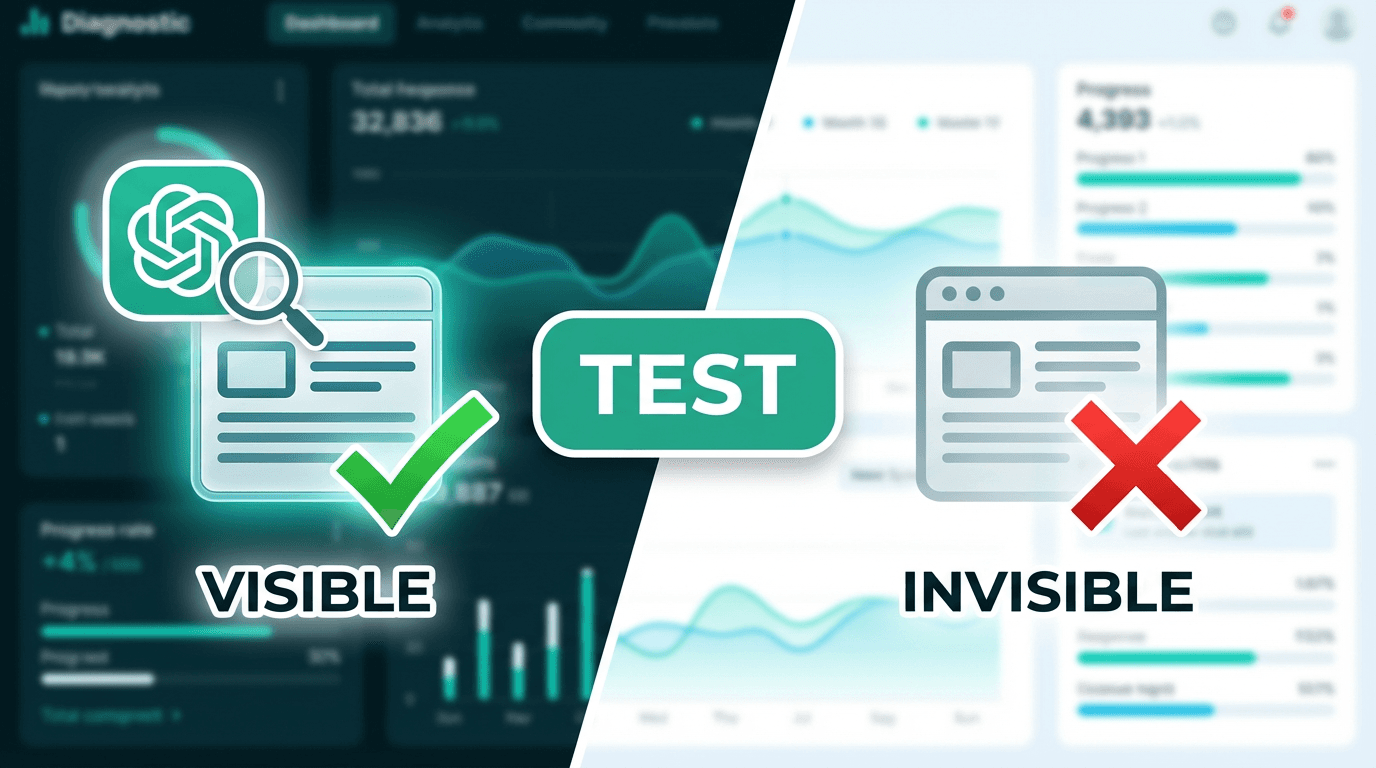
You have probably wondered: "Can ChatGPT actually see my website? Will it recommend my business when someone asks?" This guide shows you exactly how to test your visibility across all major AI assistants.
Quick Answer: Test your visibility by asking ChatGPT specific questions about your industry, checking your robots.txt for AI crawler blocks, and validating your schema markup. For the most accurate assessment, use a dedicated AI visibility audit tool.Why Testing AI Visibility Matters
AI assistants are becoming the primary way people discover products, services, and information. When someone asks ChatGPT "What is the best accounting software for small businesses?" or Perplexity "Who are the top divorce lawyers in Chicago?", the AI decides which businesses to recommend.
If your website is not visible to these AI systems, you are missing a rapidly growing channel of potential customers. The good news: testing your visibility takes just a few minutes.
Method 1: Direct ChatGPT Testing
The most straightforward way to test is to ask ChatGPT about your business directly.
Step 1: Ask About Your Business by Name
Open ChatGPT and ask: "What can you tell me about [Your Business Name]?"
What to look for:- Does ChatGPT know your business exists?
- Is the information accurate and current?
- Does it mention your key services or products?
Step 2: Ask Industry Questions
Ask questions your potential customers might ask:
- "What is the best [your service] in [your city]?"
- "How do I choose a [your industry] provider?"
- "What should I look for when hiring a [your profession]?"
- Does ChatGPT mention your business or website?
- Are competitors being recommended instead?
- Does the AI cite any sources in your industry?
Step 3: Ask Specific Knowledge Questions
Ask questions that your website content should answer:
- "What are the benefits of [your specific service]?"
- "How does [your product] work?"
- "What is the cost of [your service]?"
- Does the answer match content on your website?
- Are other sources cited for information you cover?
Method 2: Check Your robots.txt File
Your robots.txt file tells search engines and AI crawlers which pages they can access. If you have accidentally blocked AI crawlers, they cannot see your content.
How to Check
Visit your robots.txt file at: yourdomain.com/robots.txt
Look for these user-agent blocks: AI crawlers you might be blocking:- User-agent: GPTBot (OpenAI/ChatGPT)
- User-agent: ClaudeBot (Anthropic/Claude)
- User-agent: PerplexityBot (Perplexity)
- User-agent: Google-Extended (Google AI)
For maximum AI visibility, your robots.txt should either not mention these bots (allowing access by default) or explicitly allow them:
User-agent: GPTBot Allow: /
User-agent: ClaudeBot Allow: /
What indicates a problem:User-agent: GPTBot Disallow: /
If you see "Disallow: /" for any AI crawler, that crawler cannot access your site at all.
Method 3: Verify Your Schema Markup
Schema markup helps AI systems understand your content. Without it, AI crawlers see unstructured text and struggle to extract accurate information.
How to Check
Option 1: Google Rich Results TestVisit search.google.com/test/rich-results and enter your URL. This shows what structured data Google can find.
Option 2: Schema.org ValidatorVisit validator.schema.org to test any URL for schema markup.
What to look for:Essential schema types for AI visibility:
- Organization schema (who you are)
- LocalBusiness schema (if you serve a specific area)
- Service or Product schema (what you offer)
- FAQ schema (questions you answer)
- Article schema (for blog content)
- "No structured data detected"
- Missing Organization or LocalBusiness schema
- No FAQ schema on pages with Q&A content
- Errors or warnings in the validation
Method 4: Use Our Free AI Visibility Audit
Manual testing gives you directional insights, but a comprehensive audit reveals the full picture.
What the Free Audit Tests
Our AI Visibility Audit analyzes 50+ factors including:
Technical factors:- Robots.txt configuration for AI crawlers
- Schema markup completeness and validity
- Page load speed and mobile responsiveness
- SSL certificate status
- FAQ presence and structure
- Question-based headings
- Answer-focused content patterns
- Citation-worthy sentence structure
- E-E-A-T signals (expertise, experience, authority, trust)
- Author attribution
- Source citations
- Content freshness
Your AI Visibility Score
The audit produces three scores:
- SEO Score (0-100): Traditional search optimization
- GEO Score (0-100): AI search optimization
- AEO Score (0-100): Answer engine optimization
- 0-40: Critical issues hurting visibility
- 41-60: Moderate issues limiting potential
- 61-75: Good foundation, room for improvement
- 76-100: Excellent AI visibility
Based on analyzing over 10,000 websites, the average GEO score is just 38/100. Most businesses have significant room for improvement.
Interpreting Your Results
If ChatGPT Knows Your Business
Good news—you have some visibility. Focus on:
- Ensuring information accuracy
- Expanding content that AI can cite
- Adding FAQ schema for specific queries
If ChatGPT Does Not Know Your Business
This is common and fixable. Priority actions:
- Check and fix robots.txt blocks immediately
- Add comprehensive schema markup
- Create FAQ content targeting customer questions
If Competitors Appear But You Do Not
This indicates a GEO gap. Your competitors have optimized for AI search. Actions:
- Analyze what schema they use
- Study their content structure
- Identify FAQ topics they cover that you do not
What to Do If You Are Not Visible
Quick Wins (Implement Today)
- Fix robots.txt: Remove any AI crawler blocks
- Add basic schema: Organization and FAQ schema are highest impact
- Create one FAQ page: Target your top 10 customer questions
Medium-Term Improvements (This Month)
- Restructure content: Lead with answers, add question-based headers
- Add author information: Full bios with credentials
- Implement comprehensive schema: Service, Product, LocalBusiness
Strategic Changes (This Quarter)
- Build topical authority: Comprehensive content clusters
- Earn citations: Create original research and statistics
- Optimize for all AI platforms: Test on ChatGPT, Claude, and Perplexity
Testing on Other AI Platforms
Testing Perplexity Visibility
Perplexity shows its sources explicitly. Ask questions and check if your site appears in the citations.
Effective test queries:- "[Your topic] guide"
- "Best [your service] companies"
- "[Your industry] statistics"
Testing Claude Visibility
Similar to ChatGPT, ask Claude about your business and industry topics. Claude tends to be more conservative with recommendations, so visibility here indicates strong authority signals.
Testing Google AI Overviews
Search Google for your target queries and check if AI Overviews appear. If your competitors are cited but you are not, focus on the same optimization strategies.
Ongoing Monitoring
AI visibility is not set-and-forget. Regular testing helps you:
- Track improvement after optimizations
- Identify new issues before they impact traffic
- Stay ahead of algorithm changes
- Benchmark against competitors
- Monthly: Full AI visibility audit
- Weekly: Spot-check key queries in ChatGPT
- After changes: Test affected pages immediately
Get Your Free AI Visibility Score
Ready to see exactly how visible your website is to AI search? Our free audit takes 90 seconds and shows you:
- Your SEO, GEO, and AEO scores
- Critical issues blocking AI visibility
- Specific recommendations for improvement
- How you compare to industry averages
Start your free audit now and discover why AI might be ignoring your website.
Frequently Asked Questions
Why does ChatGPT not know about my business?
ChatGPT may not know your business for several reasons: your robots.txt might block GPTBot, your website lacks structured data that AI can parse, your content is not optimized for extraction, or your business simply has not been indexed yet. A comprehensive audit can identify the specific causes.
How long does it take to become visible in ChatGPT?
After implementing GEO optimizations, most businesses see improvement within 2-4 weeks. Schema markup changes are typically recognized faster (days to weeks) than content restructuring improvements (weeks to months). The key is implementing changes that AI systems can easily detect and process.
Can I force ChatGPT to recommend my business?
No, you cannot force AI recommendations, and attempting to manipulate them is counterproductive. AI systems are designed to provide helpful, accurate answers. The best approach is making your business genuinely worthy of recommendation by providing excellent, structured information that answers user questions accurately.
Do I need to pay ChatGPT to appear in results?
No, AI visibility is earned through optimization, not payment. Unlike paid search ads, you cannot buy placement in AI-generated responses. However, you can invest in proper GEO optimization to significantly improve your chances of being cited when relevant queries arise.
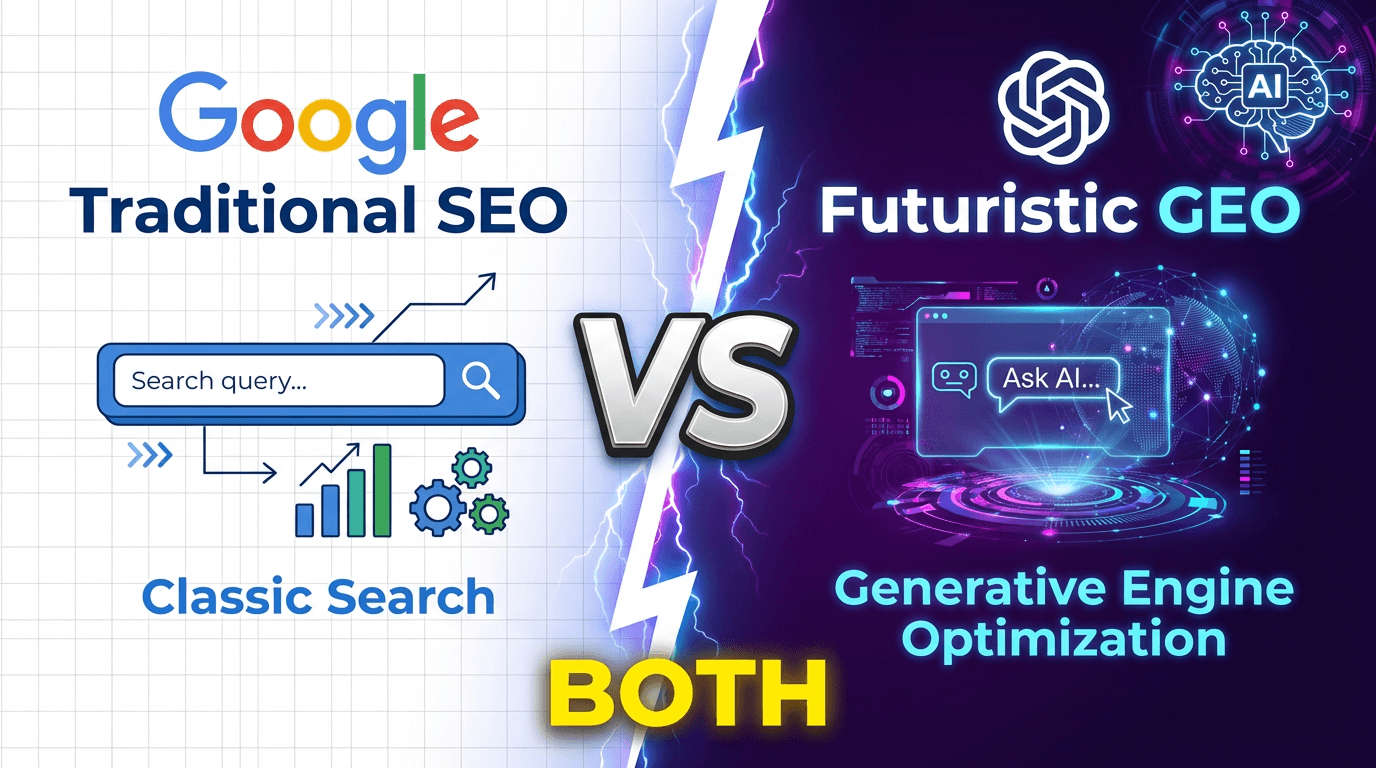
What is the difference between ChatGPT visibility and Google visibility?
Google visibility focuses on ranking in search results (blue links), while ChatGPT visibility means being cited in conversational responses. Google uses ranking factors like backlinks and keywords. ChatGPT evaluates content structure, schema markup, and citation-worthiness. You need different but complementary optimization strategies for each.
Cited Team
AI Search Optimization Experts
The Cited team has analyzed over 10,000 websites for AI search visibility. Our experts combine deep technical knowledge with practical experience helping businesses get found by ChatGPT, Claude, Perplexity, and other AI assistants.
Topics
Ready to Optimize Your Site for AI Search?
Get a free GEO audit and see your optimization score in 90 seconds.
Start Free Audit